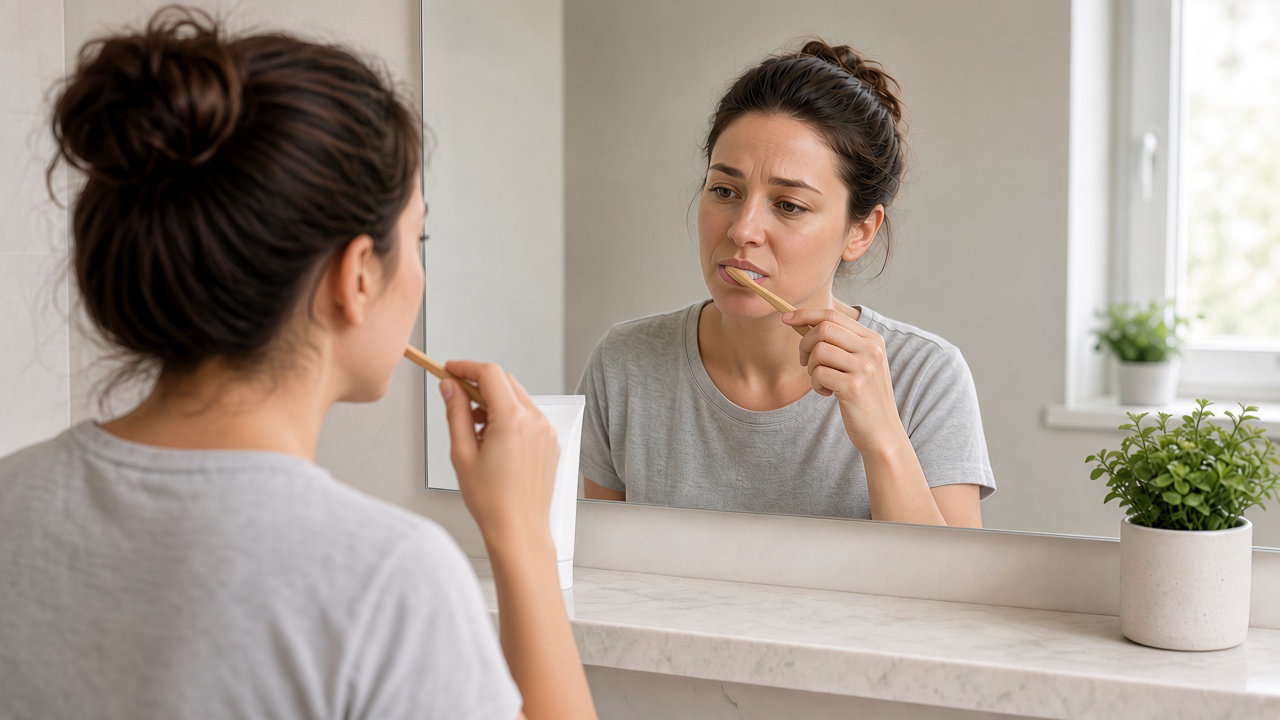
If a cold sip, a breath of winter air, or the first stroke of a toothbrush makes a tooth twinge, UK search bars fill with “sensitive toothpaste” — and, increasingly, with hydroxyapatite. The job is rarely a chemistry lesson. It is whether a HAp or nHA tube is a sensible next paste when the usual fluoride sensitivity aisle has not settled the zing, or when you would rather not use that aisle at all.
This page is a preference path for that shopper. It is not a diagnosis, and it is not a ranking of tubes.
The job is shopping, not treating a disease
A short, sharp response to cold, sweet, or touch is a common reason people change toothpaste. Dentists have a clinic name for that pattern. We do not need it here. What matters for a British basket is simpler: NHS oral-health advice still centres fluoride toothpaste at 1,350–1,500 ppm for adults and children aged 7+, used twice a day, with spit-don’t-rinse. Dedicated sensitivity pastes on the high street often add other actives that brands name on pack. Those are chemist-shelf products with their own copy. We do not restyle them as inferior, and we do not restyle hydroxyapatite as better.
Hydroxyapatite toothpaste is a cosmetic paste with a manufactured calcium-phosphate powder. After brushing, some people notice a temporary look of smoother enamel. That is a bathroom-mirror observation. It is not evidence that a nerve has been calmed, that a gap in enamel has been filled, or that a tooth has been rebuilt.
If the twinge is new, one-sided, wakes you at night, or arrives with swelling, a visible hole, or bleeding that does not settle, skip the cart. See a dentist. Unexplained sensitivity can be decay, a crack, gum recession, or something a tube will not touch.
What “for sensitive teeth” on a HAp listing actually means
Read the brand’s own wording, then stop.
Italian Biorepair is the hydroxyapatite paste UK chemists have actually carried. The company describes a zinc-hydroxyapatite powder as microRepair® — micro, not nano — and sells variants whose names mention sensitivity, as the brand states. We have not measured the powder. We do not lift a chemist leaflet into this explainer.
Japanese Apagard and American names such as Boka present nano-hydroxyapatite, as those brands state. Specialist UK shops list them. Percentages are not always on the carton. We do not invent one to make a listing sound more precise.
The Scientific Committee on Consumer Safety’s Submission IV opinion (2025) considers nano-HAp in toothpaste at concentrations of up to 29.5%, provided the particles match the rod-shaped specifications in that opinion. That is a cosmetic safety envelope. It is not an NHS recommendation for sensitive teeth, and it is not a licence to treat pain.
You will still see posts that say nano-HAp is “banned in Europe”. We do not repeat that as fact. Cautious dossiers and reformulations are regulation of a powder, not a ban on the mineral.
Retail wellness copy sometimes talks as if a paste were a treatment. We do not paste that register here. “Brand states…” is doing real work.
Preference is allowed. Ranking fluoride is not.
People choose hydroxyapatite for taste, a wish to avoid fluoride, curiosity about an Italian or Japanese tube, or because a sensitivity paste they already own has not changed how a cold sip feels. Preference is allowed. Treating HAp as better-than-fluoride dentistry for everyone with a twinge is not. This site is not an anti-fluoride campaign.
We do not claim that hydroxyapatite toothpaste cures, prevents, or reverses cavities. We do not say it rebuilds teeth or fills gaps. We do not say it is a medical treatment for sensitive teeth. A tube from an online basket is not a care plan.
If you already use a fluoride paste the NHS still names, swapping it is a personal choice, not a public-health upgrade. If you have a high decay risk, a dentist may want you on fluoride — sometimes a prescription-strength one. That conversation does not belong on an affiliate page.
A thirty-second check before you add to basket
- Is the twinge new, severe, one-sided, or unexplained? Dentist first.
- Does the pack actually say hydroxyapatite, or only a trademark?
- Nano, micro, or unspecified? If the listing is silent, we leave it unspecified. Particle size is not a ranking.
- If fluoride is present, what ppm is printed?
- Are you shopping for a cosmetic preference, or asking a paste to treat pain?
For a plain-English map of the mineral itself, start with what hydroxyapatite toothpaste is. For how packs word nano versus micro, use the nano vs micro label guide.
Where to buy in the UK
This is not a second stockist guide. For Boots, Amazon UK, Healf and Truthpaste, use where to buy hydroxyapatite toothpaste in the UK. Shelves change; confirm the listing.
If you want the high-street micro example UK chemists have actually stocked, Biorepair is the name most sensitive-teeth shoppers collide with first. There is a Biorepair listing on Amazon UK as a backup to a Boots search for Biorepair. As an Amazon Associate I earn from qualifying purchases.
What to read next
If you are weighing this mineral against the paste the NHS still names, start with hydroxyapatite vs fluoride toothpaste in the UK. For nano versus micro in a row on the names shoppers actually meet, use the Biorepair vs Boka vs Apagard comparison. Newer explainers live in the guides index. Affiliate wording is on our disclosure.
Mineral Mouth is faceless UK editorial. We do not examine patients, and we do not sell toothpaste.