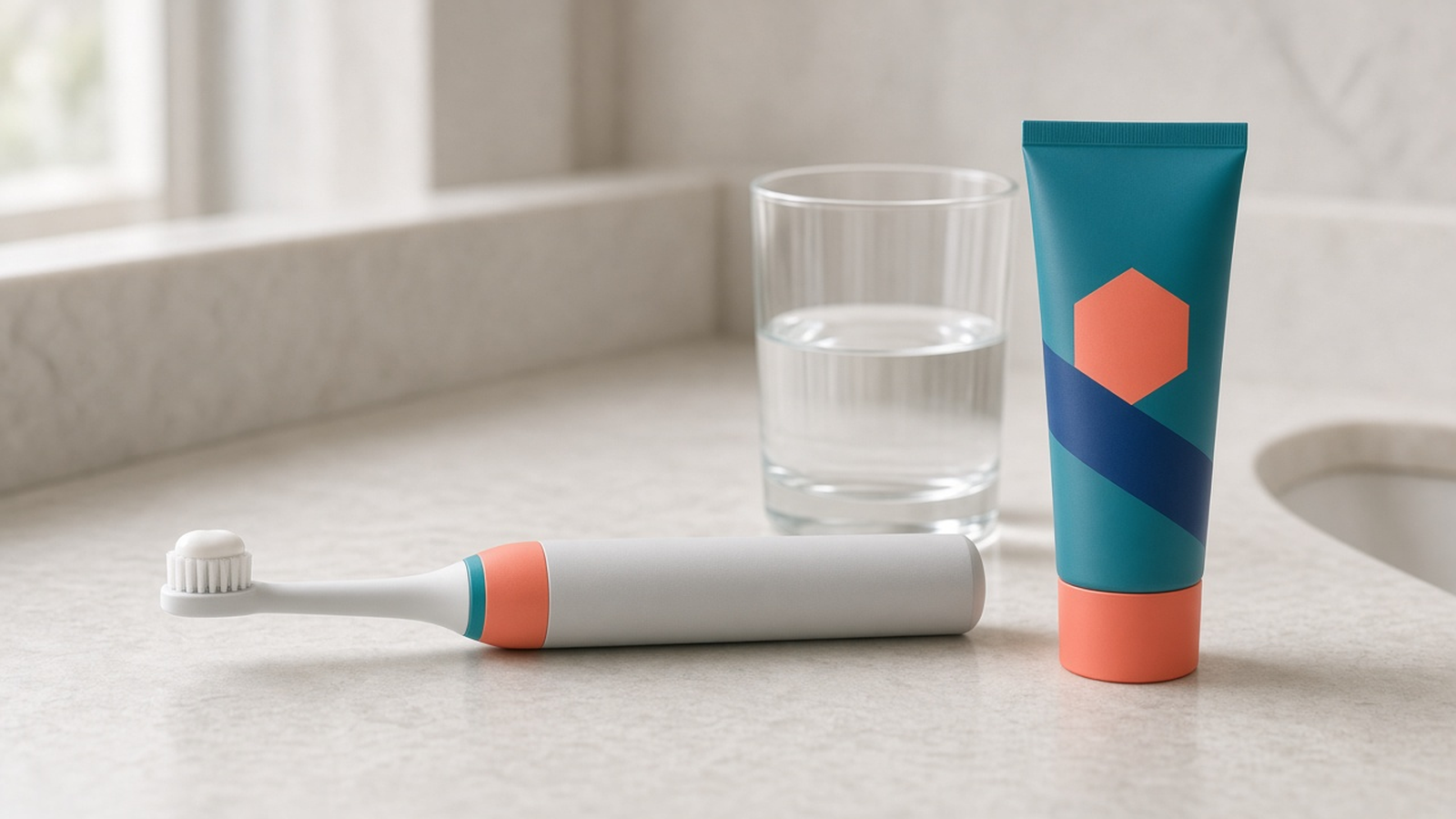
You’re pairing an electric toothbrush with a hydroxyapatite toothpaste, and wondering whether the brush changes the rules. It doesn’t. The paste is still a pea. The hand is still light. You still spit, and you still don’t rinse.
What does a normal UK brush already ask?
The daily job has not changed. Brush twice a day for about two minutes, including last thing at night. Clean the outside, the inside, and the chewing surfaces.
NHS teeth-cleaning advice says an electric brush and a manual brush are both fine, as long as you reach every surface and you use a fluoride toothpaste. Some people find the electric one easier. That is a comfort, not a different medicine.
Adults should use a fluoride toothpaste with at least 1,350 ppm. On a family carton that is usually 1,350–1,500 ppm. A hydroxyapatite tube can be fluoride-free. That is a choice you can make. It does not replace the NHS picture, and the motor in the handle does not rewrite it. How the two sit side by side is on hydroxyapatite vs fluoride toothpaste.
Does the electric brush change the toothpaste?
Hydroxyapatite is a calcium mineral. Some toothpastes add it as a powder. After brushing, teeth can look a little smoother. That is a cosmetic change you might notice in the mirror. It is not a treatment for decay, and it does not rebuild a tooth.
An electric head does not make that powder into something else. It also does not mean you have picked a better paste. The brush moves. The carton is still the carton. If a dentist has already set a fluoride toothpaste for you, stay with that plan unless they change it.
Many hydroxyapatite toothpastes foam less than a supermarket mint. On a small electric head that quiet texture is easy to misread. The mouth feels dry, so the next brush gets a longer stripe. Less foam is the paste. It is not a sign you under-dosed it. Why these tubes stay quiet is on why hydroxyapatite toothpaste doesn’t foam.
How much paste, and how hard should you press?
A pea is enough. Oral Health Foundation brushing advice says to use a pea-sized amount of fluoride toothpaste. The same small blob suits a hydroxyapatite paste. A ribbon along the bristles is more paste, not a better brush. Children are a smaller amount again, on the kids and pregnancy guide. An adult electric brush is not the plan for a toddler.
Then the hand. Pressing harder does not clean better. The Oral Health Foundation says a hard scrub can wear at the teeth and leave the gums sore, and that you should hold the brush lightly and let the bristles work. Many electric brushes warn you, with a light or a pause, if you press too firmly. That warning is about your hand. It is not a score for the toothpaste.
Guide the head slowly from tooth to tooth. You are not sawing, the way a manual brush sometimes gets used. The NHS still wants about two minutes, and every surface. A frantic thirty seconds with a heavy hand is not the two minutes.
The foundation also says to change the brush head about every two to three months, or sooner if the bristles splay. A splayed head is a worn brush. It is not a reason to buy a different mineral.
How do you finish the brush?
Spit out the extra paste. Don’t rinse straight away with water, and don’t follow the brush with mouthwash. The NHS writes that for fluoride toothpaste, because a rinse washes away what is left on the teeth. The same ending suits a hydroxyapatite toothpaste. It does not turn the mineral into a medicine.
The full habit, including a glass of water that stays full, is on spit, don’t rinse. A pea and a light hand do not change that last step. More paste does not make a rinse less of a rinse.
When should you see a dentist?
See a dentist for pain, a hole you can see, swelling, gums that keep bleeding, or sensitivity that does not settle. Gums that stay sore after you have already lightened your hand are a reason to book, not a reason to scrub harder or to swap tubes and wait.
This is general information, not personal dental advice.
Where to buy in the UK
For Boots, Amazon UK, Healf, and Truthpaste, start with where to buy hydroxyapatite toothpaste in the UK. Read the carton. A fluoride-free paste is still a fluoride-free paste when the brush is electric.
To browse the category, there is an Amazon UK search for hydroxyapatite toothpaste. Treat it as a catalogue, not a shortlist of brushes. As an Amazon Associate I earn from qualifying purchases.
What to read next
How the mineral sits next to fluoride is on hydroxyapatite vs fluoride toothpaste. The names on the UK shelf are in Biorepair vs Boka vs Apagard. More explainers are on the guides index. How affiliate links work is on our disclosure.