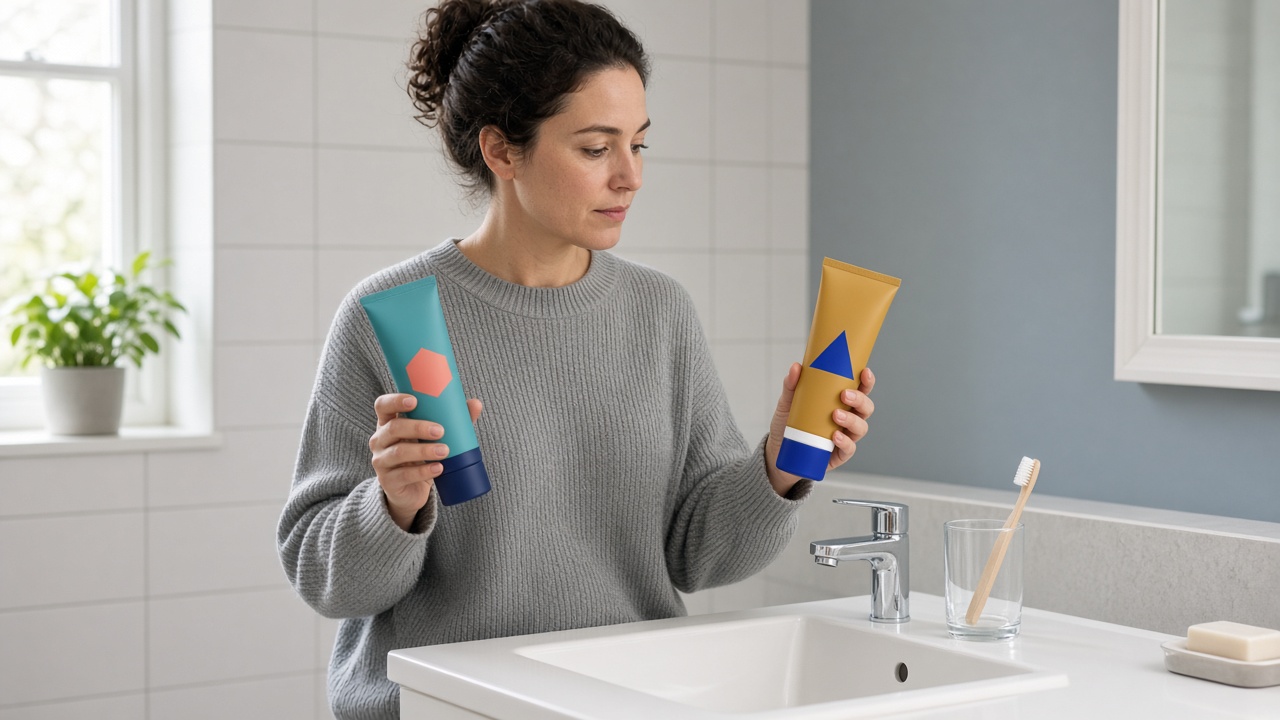
You’re keeping the fluoride toothpaste you already know, and you’re adding a second tube for the other brush. Often that means fluoride after breakfast, and a hydroxyapatite toothpaste last thing at night. The two pastes do different jobs on the label. They do not turn into a single new paste just because they share a shelf.
What does the NHS still say about brushing at night?
The ordinary routine has not changed. Brush twice a day for about two minutes. One of those brushes is last thing before bed.
NHS teeth-cleaning advice says night-time brushing is important, and that the other brush can be at any other time. Adults should use a fluoride toothpaste with at least 1,350 ppm. On a family carton that is usually 1,350–1,500 ppm. After you brush, spit, and don’t rinse straight away.
That night brush is part of the advice, not a spare slot. A second tube does not rewrite it. This site is not a campaign against fluoride. How a hydroxyapatite paste sits beside that advice, when you are choosing one approach or the other, is on hydroxyapatite vs fluoride toothpaste.
Where does the hydroxyapatite tube fit?
Hydroxyapatite is a calcium mineral. Some toothpastes add it as a powder. After brushing, teeth can look a little smoother. That is a cosmetic change you might notice in the mirror. It is not a treatment for decay, and it does not rebuild a tooth.
Plenty of hydroxyapatite tubes are made without fluoride. Using one of those last thing at night means the night brush is not the fluoride brush the NHS describes. You can still choose that. It is not an upgrade, and it is not what the night-time line on the NHS page is asking for.
If a dentist has already set a fluoride toothpaste for you, keep that plan for the brushes they meant, unless they change it. A mineral tube on the other side of the sink does not cancel their note.
Is this the same as one toothpaste that lists both?
No. Some UK cartons print fluoride and hydroxyapatite on the same ingredients list. That is one tube, and one brush. How to read that label is on fluoride and hydroxyapatite in one toothpaste.
This page is the other arrangement. Two tubes. One paste per brush. You do not squeeze both onto the same head to cover the morning and the night in one go. That mix is not what either carton describes.
A word like Night on the front of a hydroxyapatite carton is a product name. It is not a clock, and it does not mean that tube has taken the NHS night brush. Day and night cartons are a separate shelf question, on day and night tubes.
How do you keep the two brushes straight?
Leave both tubes where you can see the fronts. The fluoride one should show a fluoride name, such as sodium fluoride or sodium monofluorophosphate, and a ppm. Set that number beside 1,350–1,500 ppm for an adult. If the ppm is missing, don’t borrow it from another carton.
The other tube should say hydroxyapatite. Then check whether it also says fluoride. If it doesn’t, you know the night brush, in the order people usually mean, is the fluoride-free one. A percentage on that tube, if one is printed, belongs to the mineral. It is not a fluoride strength. What those percentages do and don’t mean is on how to read a hydroxyapatite toothpaste label.
Use a pea on each brush. A longer stripe does not make a split routine more thorough. Brush for about two minutes, including the inside, the outside, and the chewing surfaces. Spit. Don’t rinse the paste straight off with a glass of water, and don’t follow either brush with mouthwash. The NHS writes that ending for fluoride toothpaste. The same sink habit is on spit, don’t rinse.
Many hydroxyapatite pastes foam less than a supermarket mint. A quiet brush at night is the texture. It is not a sign you should add the fluoride tube on top.
This split is an adult bathroom. It is not a plan for a child. Children’s amounts, and what to think about in pregnancy, stay on hydroxyapatite toothpaste for kids and pregnancy.
What if you want the night brush to stay a fluoride one?
You can swap the order and still use two tubes. Hydroxyapatite toothpaste at the other time of day. Fluoride toothpaste last thing at night, at 1,350–1,500 ppm if that is what the carton prints.
That version keeps the brush the NHS calls important as a fluoride brush. It is still your choice. Teeth can look a little smoother after the hydroxyapatite brush. That is cosmetic. It does not change what the fluoride tube is for.
Neither order outranks the other. The NHS picture is still fluoride, twice a day, including bedtime. Anything else is a choice you are making beside that, not a correction of it.
When should you see a dentist?
See a dentist for pain, a hole you can see, swelling, gums that keep bleeding, or sensitivity that does not settle. Two tubes will not answer that. If a dentist has already chosen your toothpaste, take the second tube to the next visit and say which brush you use it on.
This is general information, not personal dental advice.
Where to buy in the UK
The fluoride toothpaste, in the morning order above, is an ordinary adult fluoride paste at 1,350–1,500 ppm. It does not need to be a special import. Read the ppm on the carton you already have.
For a hydroxyapatite tube, start with where to buy hydroxyapatite toothpaste in the UK. Shelves change. Check the ingredients on the day, including whether the tube contains fluoride. The names UK shops stock are compared on which hydroxyapatite tubes are on the UK shelf.
To browse the category, there is an Amazon UK search for hydroxyapatite toothpaste. Treat it as a catalogue. A listing has not shown you a fluoride ppm until you open it and read it. As an Amazon Associate I earn from qualifying purchases.
What to read next
How the two ingredients sit when they are not in separate tubes is on fluoride and hydroxyapatite in one toothpaste. The wider picture is on hydroxyapatite vs fluoride toothpaste. More explainers are on the guides index. How affiliate links work is on our disclosure.